When good employees leave, you lose more than just their productivity. You lose insights into what’s broken in your organization. An exit interview form is your last chance to capture honest feedback that could prevent future turnover — but only if you design it right.
Most companies get exit interviews wrong. They ask vague questions, create forms that feel like interrogations, or make the process so lengthy that departing employees give superficial answers. The result? You miss the real reasons people leave and repeat the same mistakes with future hires.
Here’s how to create an exit interview form that actually works — one that encourages honest feedback and gives you actionable insights to improve retention.
Why exit interview forms matter more than you think
Exit interviews aren’t just HR paperwork. They’re your organization’s feedback loop. When done well, they reveal patterns you can’t see from inside the company bubble.
Keep in mind that by the time someone leaves, they’ve often already been browsing openings on Jooble or other job search sites, so their answers reflect how your company compares to what else is out there.
Research from the Work Institute shows that 77% of employee turnover is preventable. But you can only prevent what you understand. Exit interviews help you spot recurring issues before they drive away more talent.
The key is making departing employees feel safe to be honest. They’re already leaving — they have nothing to lose by telling the truth. But they need the right environment and questions to open up.
Step 1: Choose the right form builder for your exit interview
Your exit interview form needs to feel professional and secure. Departing employees are sharing sensitive information about managers, colleagues, and company culture. They need confidence that their responses will be handled appropriately.
Look for a form builder that offers:
- Professional design options that match your company branding
- Anonymous response options if needed
- Secure data handling with encryption
- Easy sharing via link or email
- Response export for analysis
We built Fomr specifically for situations like this. You can create professional-looking forms with complete design control, share them securely, and export responses for analysis — all on our free plan.
Give it a try
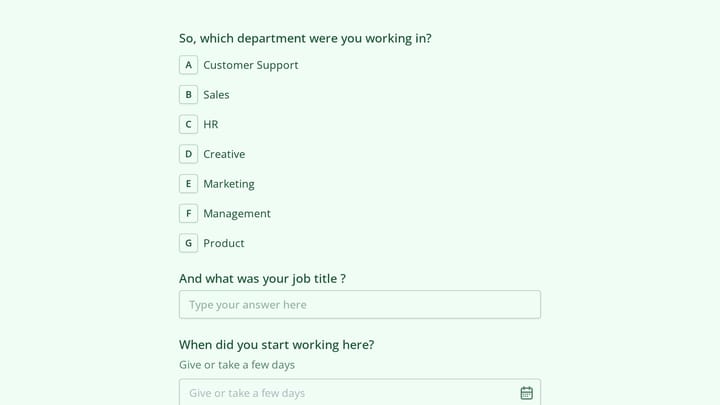
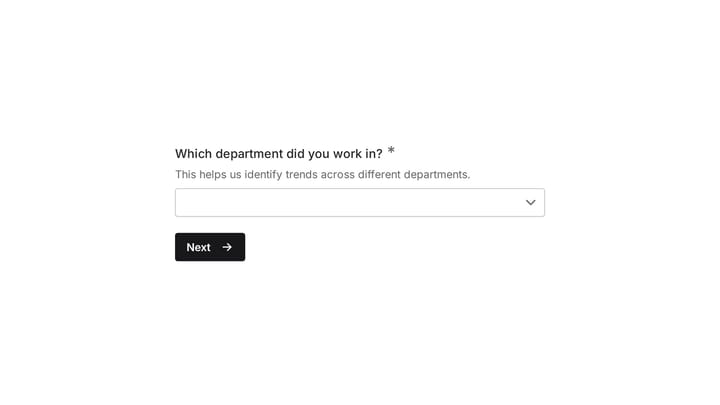
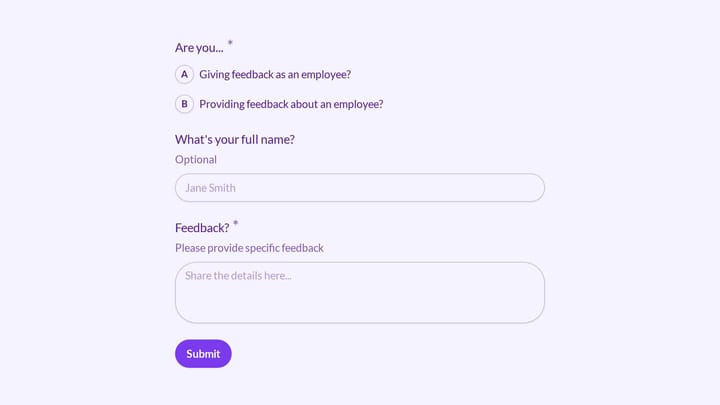
Try this Fomr exit interview survey demo 2
Try the role, departure-reason, and workplace-feedback questions in this Fomr exit survey. Review the wording for your organization; the preview does not guarantee anonymity or branch between answers.

Step 2: Structure your exit interview form strategically
Start with easier questions and build toward more sensitive topics. This approach, called the “funnel technique,” helps departing employees get comfortable before diving into potentially difficult feedback.
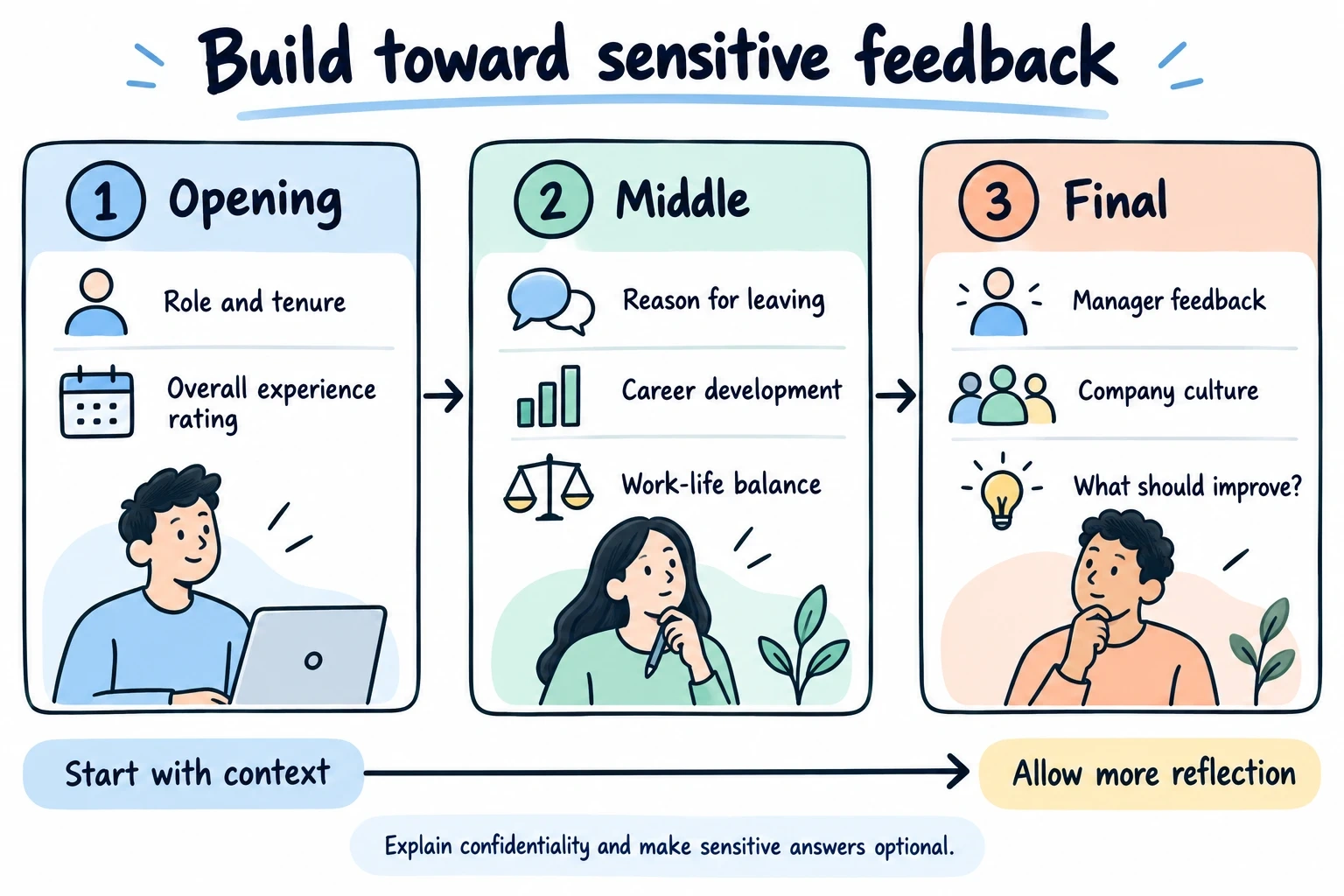
Here’s the structure that works:
Opening section (2-3 questions):
- Basic information (department, role, tenure)
- Overall experience rating
- Would you recommend this company as a place to work?
Middle section (4-6 questions):
- Reason for leaving
- Job satisfaction factors
- Career development opportunities
- Work-life balance
Final section (3-4 questions):
- Management feedback
- Company culture insights
- Suggestions for improvement
- Comments
This progression feels natural and gives employees time to warm up before the harder questions.
Step 3: Write questions that uncover real insights
Generic questions get generic answers. Instead of asking “How was your experience?”, dig deeper with specific, actionable questions.
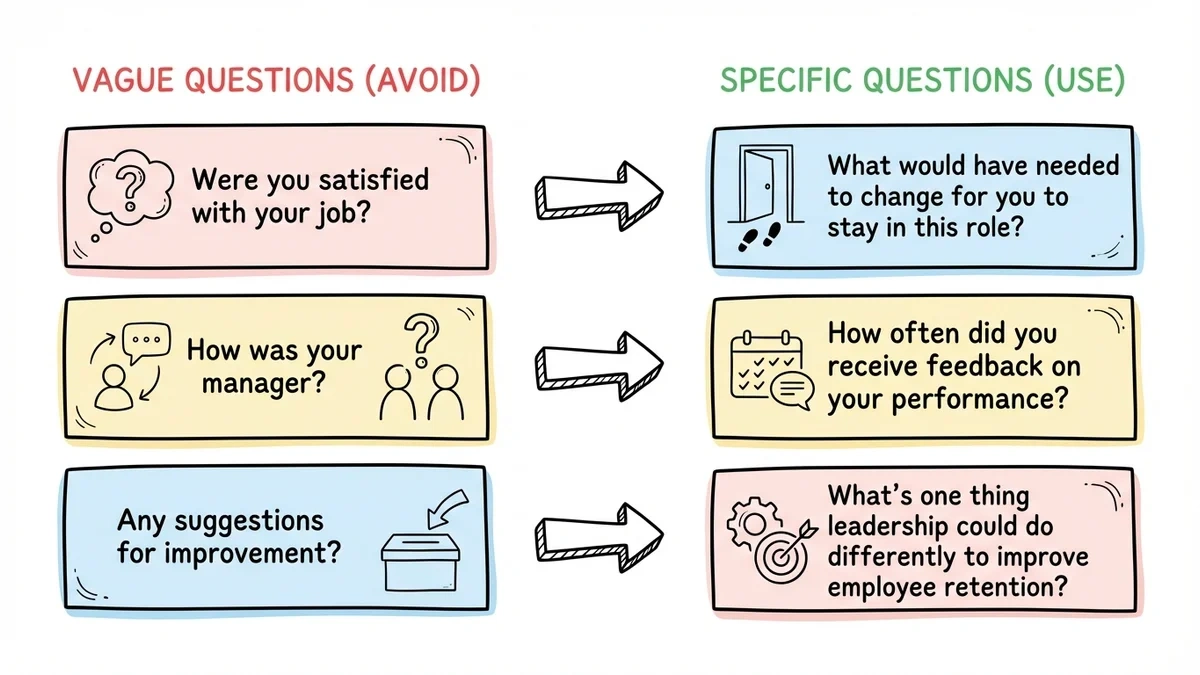
Replace vague questions like:
- “Were you satisfied with your job?”
- “How was your manager?”
- “Any suggestions for improvement?”
With specific ones like:
- “What would have needed to change for you to stay in this role?”
- “How often did you receive feedback on your performance?”
- “What’s one thing leadership could do differently to improve employee retention?”
Use a mix of question types to keep the form engaging:
- Multiple choice for standardized data
- Rating scales for satisfaction metrics
- Open-ended text for detailed feedback
- Yes/no questions for clear binary issues
Step 4: Make anonymity a choice, not a requirement
Some employees want to provide feedback anonymously. Others are comfortable being identified. Give them the choice.
Add an optional field at the beginning: “Would you like this feedback to be anonymous? If yes, please don’t include your name anywhere in this form.”
This approach works better than mandatory anonymous forms because:
- It builds trust by giving employees control
- You can follow up with willing participants for clarification
- It signals that you’re serious about using the feedback constructively
Step 5: Keep it focused but thorough
Your exit interview form should be thorough enough to capture useful insights but short enough that people actually complete it. Aim for 10-15 questions that take 10-15 minutes to answer thoughtfully.
Essential topics to cover:
- Primary reason for leaving
- Job satisfaction and engagement
- Manager relationship and support
- Career development opportunities
- Compensation and benefits
- Work environment and culture
- Recommendations for improvement
Questions you can skip:
- Detailed project feedback (unless role-specific)
- Company history questions
- Hypothetical scenarios
- Redundant satisfaction ratings
Step 6: Design for mobile completion
Many departing employees will complete your exit interview form on their phone, especially if they’re filling it out after their last day. Make sure your form works well on mobile devices.
Choose a form builder with responsive design that automatically adapts to different screen sizes. Test your form on both desktop and mobile before sending it out.
Step 7: Time your exit interview strategically
When you send the exit interview form matters as much as what questions you ask. Send it too early, and employees might not be ready to be fully honest. Send it too late, and they may not respond at all.
Best timing:
- During the notice period: Send 2-3 days after they give notice
- On the last day: Include it in final paperwork
- One week after departure: Follow up if they haven’t completed it
Include a clear deadline in your message: “Please complete this by [date] so we can use your feedback to improve the experience for current and future employees.”
Step 8: Write a compelling introduction
The first thing departing employees see sets the tone for their entire response. Your form introduction should explain why their feedback matters and how it will be used.
Example introduction: “Your insights help us create a better workplace for current and future employees. This exit interview typically takes 10-15 minutes to complete. Your responses will be shared with [specific people/departments] to identify areas for improvement. You can choose to provide feedback anonymously if you prefer.”
Be specific about who will see the responses and how they’ll be used. Vague promises about “making improvements” don’t build confidence.
Step 9: Test your form before launching
Before sending your exit interview form to actual departing employees, test it thoroughly:
- Complete it yourself to check the flow and timing
- Ask a colleague to review it for clarity
- Test on mobile to make sure all questions display properly
- Check the thank-you page and any automated responses
Small issues like broken logic or confusing wording can derail the entire process.
Step 10: Follow up on the insights you gather
The most important step happens after you collect responses. Exit interview data is only valuable if you act on it.
Set up a process to:
- Analyze responses quarterly to identify patterns
- Share insights with relevant managers and leadership
- Create action plans for recurring issues
- Follow up with changes you’ve made based on feedback
Consider sending a company-wide update every six months about improvements made based on exit interview feedback. This shows current employees that their future feedback will be taken seriously.
Common exit interview form mistakes to avoid
Making it too long. If your form takes more than 20 minutes, you’ll get incomplete responses or people won’t start at all.
Asking leading questions. “What did you love about working here?” assumes they loved something. Ask neutral questions instead.
Focusing only on negatives. Include questions about what worked well so you can preserve good practices.
Making it feel like an interrogation. Use conversational language and explain why you’re asking each question.
Not providing context. Explain how the feedback will be used and who will see it.
Forgetting about mobile users. Test your form on phones and tablets before sending it out.
Ready to create your exit interview form?
Building an effective exit interview form doesn’t require expensive software or complex systems. With the right approach and a good form builder, you can create professional forms that encourage honest feedback and help you improve retention.
We’ve designed Fomr to handle exactly these kinds of sensitive, professional forms. You can create a complete exit interview form with custom branding, multiple question types, and secure response collection — all without creating an account. Try building your exit interview form now and see how easy it can be to gather the insights that will help you keep your best people.