Most roundups of employee feedback software rank the same eight vendors from best to worst, as if every HR team wants the same thing. They don’t. A company running a quarterly eNPS pulse needs almost nothing from the tool that runs 360 review cycles, and the tool that nails both usually costs three times what either job is worth on its own.
The other reason these lists mislead: they treat anonymity as a checkbox. It isn’t. Vendors use “confidential” and “anonymous” to mean different things, thresholds can be lowered by an admin mid-survey, and at least one major platform links responses to individuals by default. If your launch email promised anonymity and the tool didn’t deliver it, that’s a trust problem you don’t get to fix later.
Worth remembering why any of this matters: Gallup found global employee engagement fell to 20% in 2025, its lowest level since 2020. Measuring it badly is worse than not measuring it.
So this list is sorted by the job, not by a single ranking. Prices and anonymity rules below were checked against each vendor’s own pages and help docs.
How to shortlist employee feedback software without burning a quarter
There are four jobs hiding under one category name, and they pull in different directions.
| Feedback job | Essential capability | Identity and reporting question |
|---|---|---|
| Recurring pulse | Scheduled questions and aggregate trends | Are responses linked to identities, and are small groups suppressed? |
| eNPS | Score calculation and trends across waves | Can team or tenure filters reveal an individual? |
| 360 reviews | Named participants, rater relationships, and review cycles | Who can identify each rater: HR, managers, or the review subject? |
| Exit and onboarding | Lifecycle triggers and appropriate follow-up | Is feedback attributed or unattributed, and who sees individual answers? |
Known review participants and anonymous-to-the-recipient feedback are different properties. Agree on the intended confidentiality model before choosing the tool.
Recurring pulse is a short question set on a cadence, reported in aggregate. eNPS is one question tracked over time, cut by team and tenure, with a trend line you can show a board. 360 reviews are multi-rater cycles with named participants and calibration. Exit and onboarding surveys fire on lifecycle events, which means they need to know when someone resigns.
The identity model depends on the program. Pulse and eNPS reporting often needs group protection; exit feedback may be attributed or unattributed. A 360 process needs known review participants, but visibility of individual raters can differ for HR and the review subject. Check those controls separately.
Before any demo, get answers to these:
- Is the respondent’s identity stored anywhere in your system for this survey, even if it’s hidden from reports?
- What is the minimum group size before results display, who can change it, and is there a record when they do?
- Does the eNPS number get calculated and trended for you, or does it come out as raw survey data?
Question one is the one vendors answer least directly. Ask it exactly that way.
The comparison table
Identical criteria, every tool. Prices are the published entry point, not a negotiated quote.
| Tool | Strongest job | How anonymity is enforced | eNPS scored for you | HRIS sync | Published entry price |
|---|---|---|---|---|---|
| Workleap Officevibe | Recurring pulse | Anonymous by default; scores hidden under 3 respondents, comments under 5 | Yes | Yes | Platform bundles from $4,999/year |
| Lattice Engagement | eNPS on a budget | Threshold 3-10 (default 5); Basic vs Strong protection, Basic is the default | Yes | Yes (Workday, BambooHR) | $4/seat/mo, $4,000 annual minimum |
| 15Five | Pulse and 360 together | Confidentiality threshold defaults to 5, admin can lower to 3 | Yes, in Engage | Yes (ADP, BambooHR) | $4/user/mo Engage, $11 Perform |
| Leapsome | 360 review cycles | Anonymous options exist; thresholds not publicly documented | Not publicly documented | Yes | Not publicly itemized, 1-year minimum |
| Culture Amp | Exit and onboarding | Attributed by default; unattributed is a separate format; group minimum ~5 | Yes | Yes | Quote only, no figures published |
| SurveyMonkey | One-off DIY surveys | Opt-in per collector; you disable tracking yourself | Scores an NPS question, no trend | No | Free tier; team plans ~$30/user/mo, 3 seats |
| Fomr | One-off link forms | None. Not an anonymity product | No | No | Free |
Best for recurring pulse surveys: Workleap Officevibe
Officevibe enforces anonymity in the product rather than in a policy document, which is the distinction that matters. Team scores don’t render until at least 3 active members have answered, and anonymous text feedback stays hidden from managers until 5 members have participated. Employees can choose to reveal their identity on a comment, so identity is opt-in rather than opt-out. That’s the right direction.
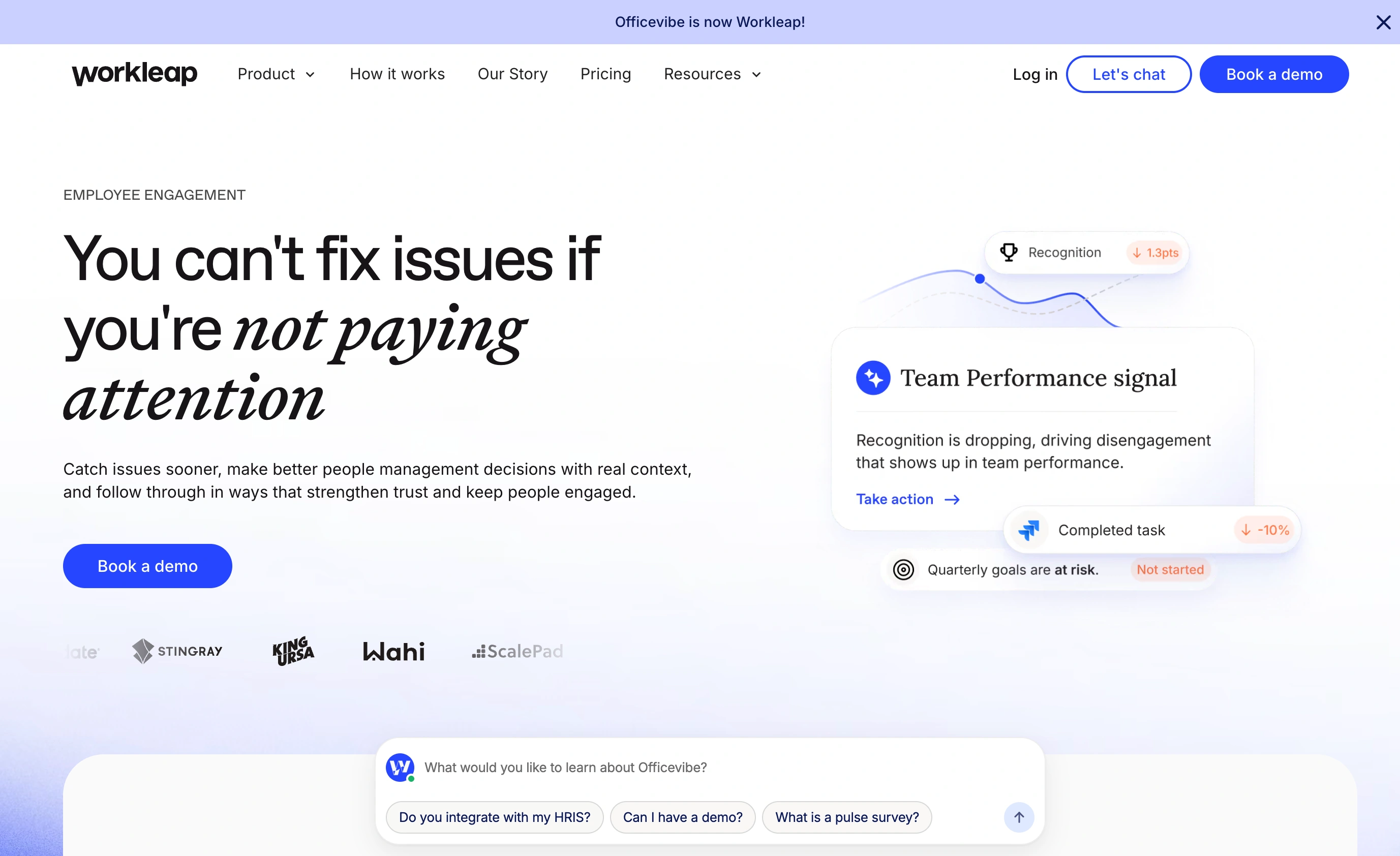
Where it loses: the price shape. Workleap sells platform bundles now, starting at $4,999 a year for Standard and $11,999 for Pro, with custom pricing above 250 employees. For a 40-person company that’s roughly $10 per employee per month at list, and you’re buying the whole platform, not just the pulse tool.
Honest limitation: a 3-respondent threshold for scores is on the permissive end. In a five-person team where a manager already knows two people’s views, three responses is not much cover. Officevibe lets you see scores at that point anyway.
Best eNPS software on a budget: Lattice Engagement
Lattice sells Engagement as a standalone module at $4 per seat per month, and it includes pulse, onboarding and exit surveys, action planning, and native eNPS scoring. That’s the cheapest published per-seat entry point for real eNPS software in this list.
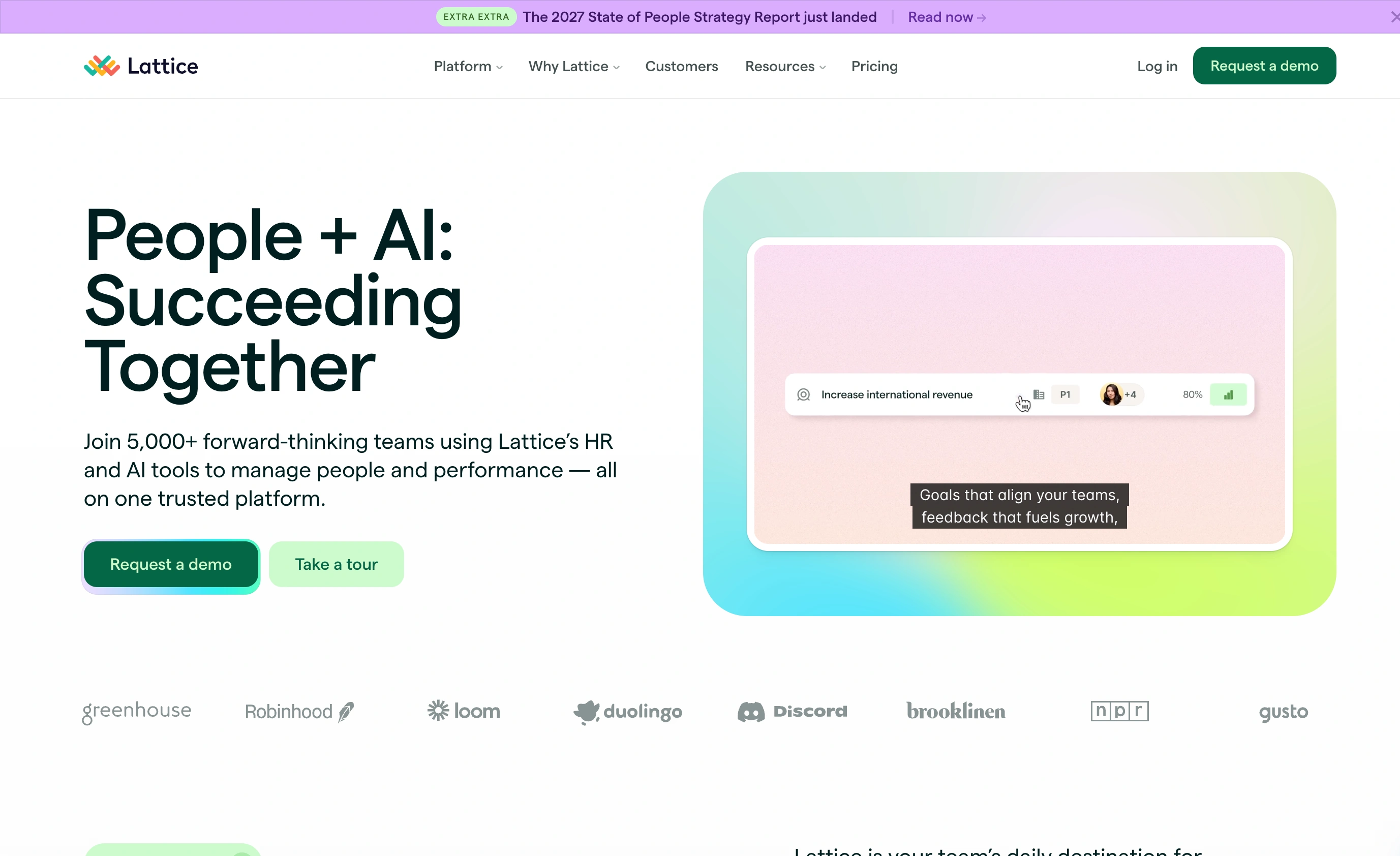
Where it loses: the minimum annual agreement is $4,000 regardless of headcount. The $4 seat price only becomes real above roughly 84 seats. A 30-person company pays about $11 per employee per month in practice, which changes the comparison entirely.
The anonymity detail people miss: Lattice offers Basic and Strong anonymity protection, and surveys default to Basic. Basic hides groups below the threshold but does not prevent indirect identification through group comparison, where subtracting one reported group from another narrows down who said what. Strong protection exists specifically to close that gap, and you have to turn it on. Admins can also adjust the threshold as low as 3, including while a survey is live.
If you promise your team anonymity, switch to Strong before launch and leave the threshold alone. Also note 360 reviews are not in Engagement, they’re in the $10 per seat Performance module.
Best for pulse and 360 in one contract: 15Five
15Five publishes its pricing cleanly, which is rarer than it should be. Engage is $4 per user per month billed annually and covers engagement surveys, eNPS, and action planning. Perform is $11 and adds 360 feedback across manager, peer, and upward raters. Total Platform is $16.
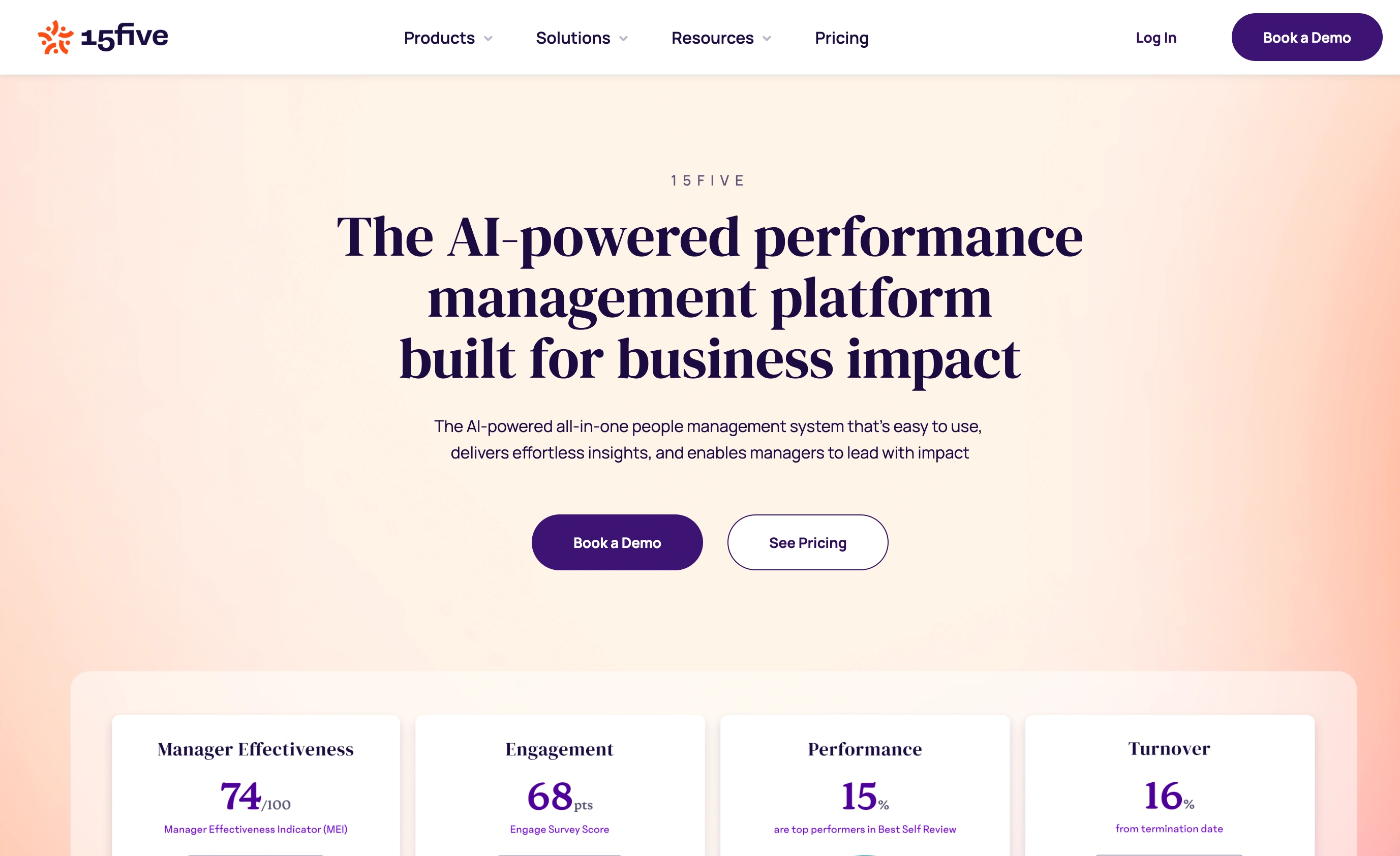
The confidentiality threshold defaults to 5 respondents, and an admin can lower it to 4 or 3. 15Five recommends keeping it at 5. I’d agree, and I’d go further: decide the threshold before you write the launch email, then don’t change it, because lowering it after the fact quietly breaks a promise you already made.
Where it loses: if you want both jobs you’re at $16 per user per month, which is four times the Engage price for a 360 cycle most companies run once a year. Running Engage plus a separate lightweight review tool is often cheaper.
Worth saying plainly: a 360 review is not anonymous. Raters are typically visible to HR even when hidden from the subject, and that’s by design. Don’t market it internally as anonymous.
Runner-up here is Leapsome, which has strong review cycles and a good question library. It doesn’t publish itemized per-module pricing and requires a one-year minimum contract, so you can’t sanity-check the budget before a sales call. For a small team, that alone is disqualifying.
Best for exit and onboarding surveys: Culture Amp
Culture Amp’s exit and onboarding surveys have their own reporting rules, which matters more than it sounds. Exit populations are tiny and trivially deanonymized, so per-survey rules rather than one global setting is the correct design.
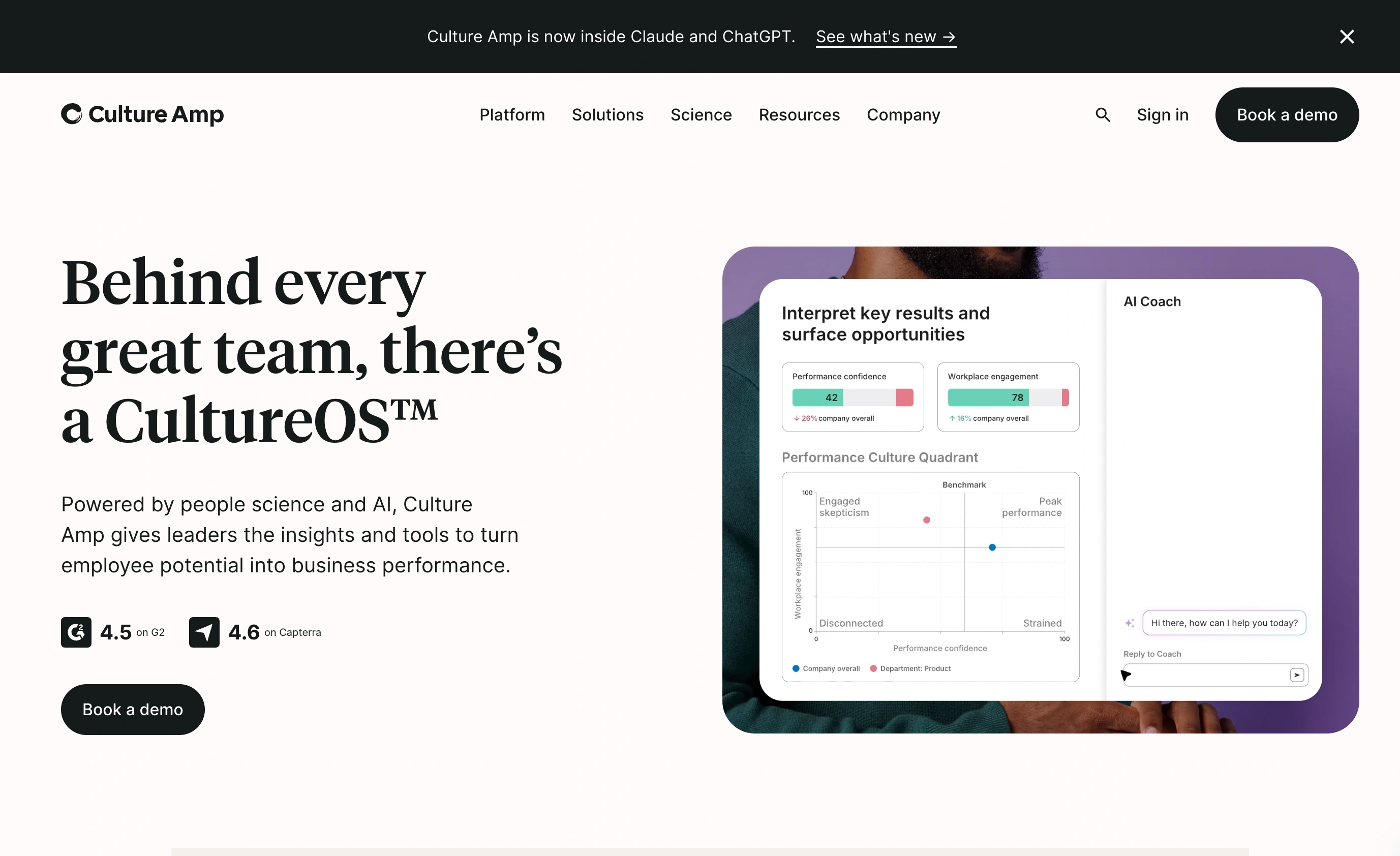
Here’s the thing to get right before you buy: Culture Amp engagement surveys default to the attributed format, meaning responses are linked to the individual so results can be sliced by demographic and reporting line. Culture Amp’s own documentation on attributed and unattributed formats explains that unattributed surveys are a separate format you choose deliberately, and the company prefers to describe its surveys as confidential rather than anonymous. Reporting group minimums are usually 5.
That’s a defensible design. Attributed data is what makes segment analysis and manager-level reporting possible at all. But if your comms said “anonymous” and the platform is doing attributed-and-confidential, you’ve made a claim the vendor never made.
Where it loses: no published pricing anywhere. Every tier routes to a sales contact form, split into headcount bands under 200, 200 to 999, and 1,000 plus. You cannot budget from the website, and third-party estimates float across a wide enough range to be useless for planning. If you’re pairing Culture Amp with your own process, our exit interview form guide covers the question design side.
Best for one-off DIY surveys: SurveyMonkey
SurveyMonkey is the default when someone in HR needs a survey out the door this week. The free plan lets you view up to 25 responses per survey. Team plans require a minimum of three seats, and Team Advantage includes a shared pool of 50,000 responses a year at roughly $30 per user per month in the US, billed annually.
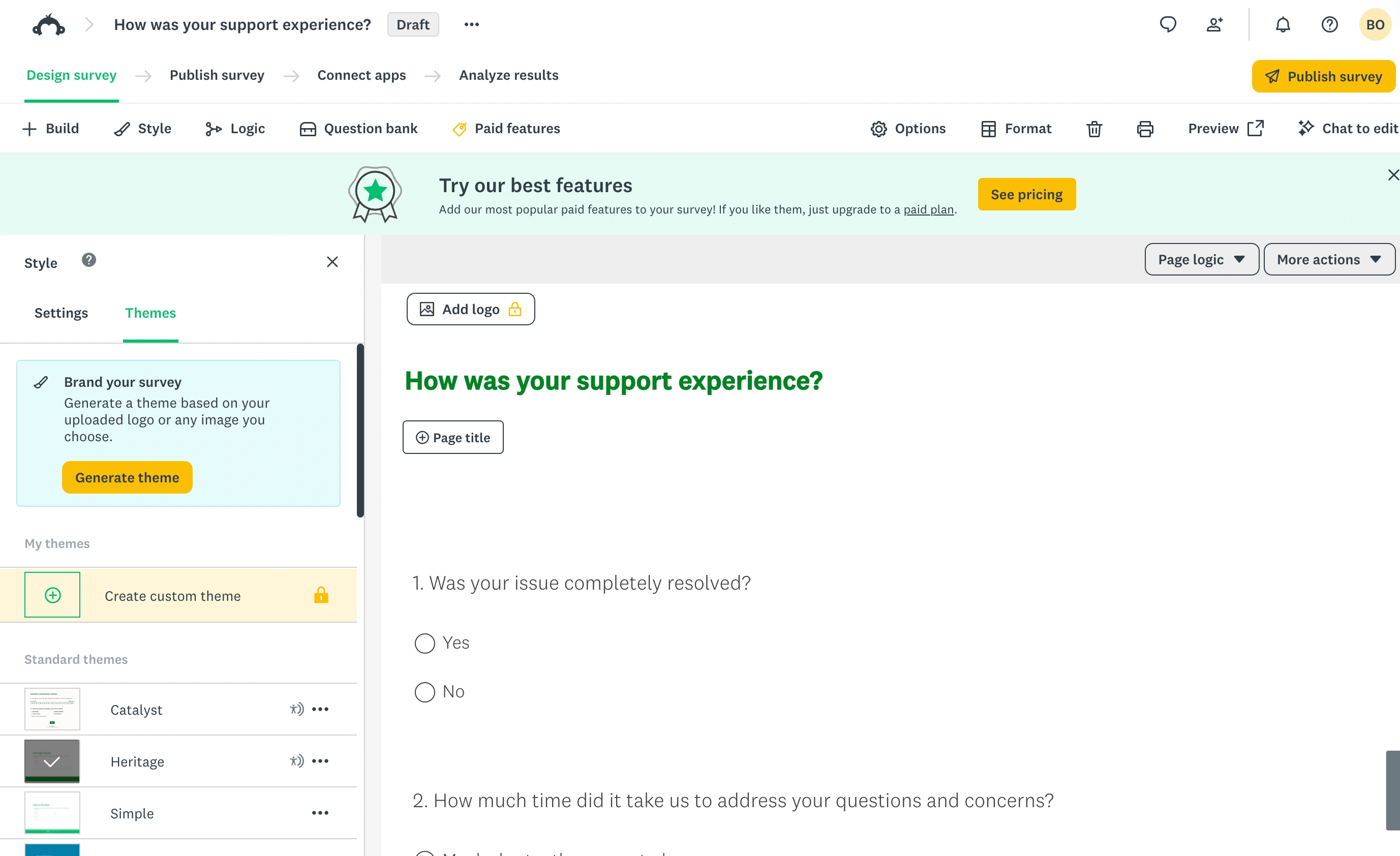
Anonymity is entirely your job. You have to open each collector’s options and turn off IP and email tracking separately, for every collector attached to that survey. And if Respondent Authentication is switched on, the survey is never anonymous, because the SSO profile is tracked regardless.
This is exactly where teams get burned. Someone sends the survey through an email collector, misses one toggle, and HR ends up holding a spreadsheet with names attached to answers it promised were anonymous. That’s not a SurveyMonkey bug, it’s a foot-gun that a purpose-built HR platform wouldn’t hand you.
Where it loses: no HRIS sync, no engagement program layer, and eNPS is a question you score rather than a metric the platform trends for you across waves.
Where Fomr fits, and where it doesn’t
Straight answer first. If you need anonymous 360 feedback, an eNPS trend line, or surveys that fire automatically when someone resigns, don’t use us. Fomr has no anonymity guarantees, no eNPS automation, no HRIS sync, and no scheduled send cadence. None of those are close, and I’d rather you find that out here than three weeks into a rollout.
What Fomr is actually good for is the one-off pulse form you send by link. A post-reorg temperature check. A quick read on a new policy. A workshop debrief. Unlimited forms, responses, fields, and team members on the free plan, and enough design control that the form doesn’t look like a compliance exercise, which measurably affects whether people finish it.
The limitation stated directly: we don’t strip identifying data, we don’t enforce a minimum response threshold before showing results, and nothing stops an admin from reading individual submissions. If you tell your team a Fomr form is anonymous, that’s a promise you are making, not one the product enforces. Conditional logic and integrations are on the way, but they aren’t here yet.
If that narrow slot is what you need, you can build a form without signing up and have it out in about ten minutes. For the eNPS math itself, our free eNPS calculator will do the arithmetic without a subscription. For the wider set of HR forms, we wrote a separate guide on choosing a form builder for HR.
Give it a try
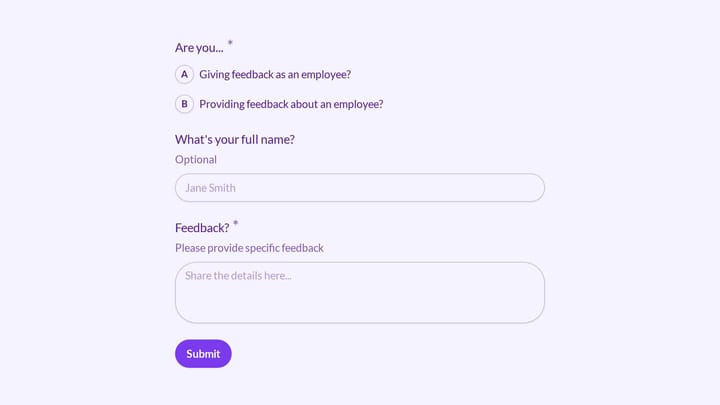
Try this Fomr employee feedback form
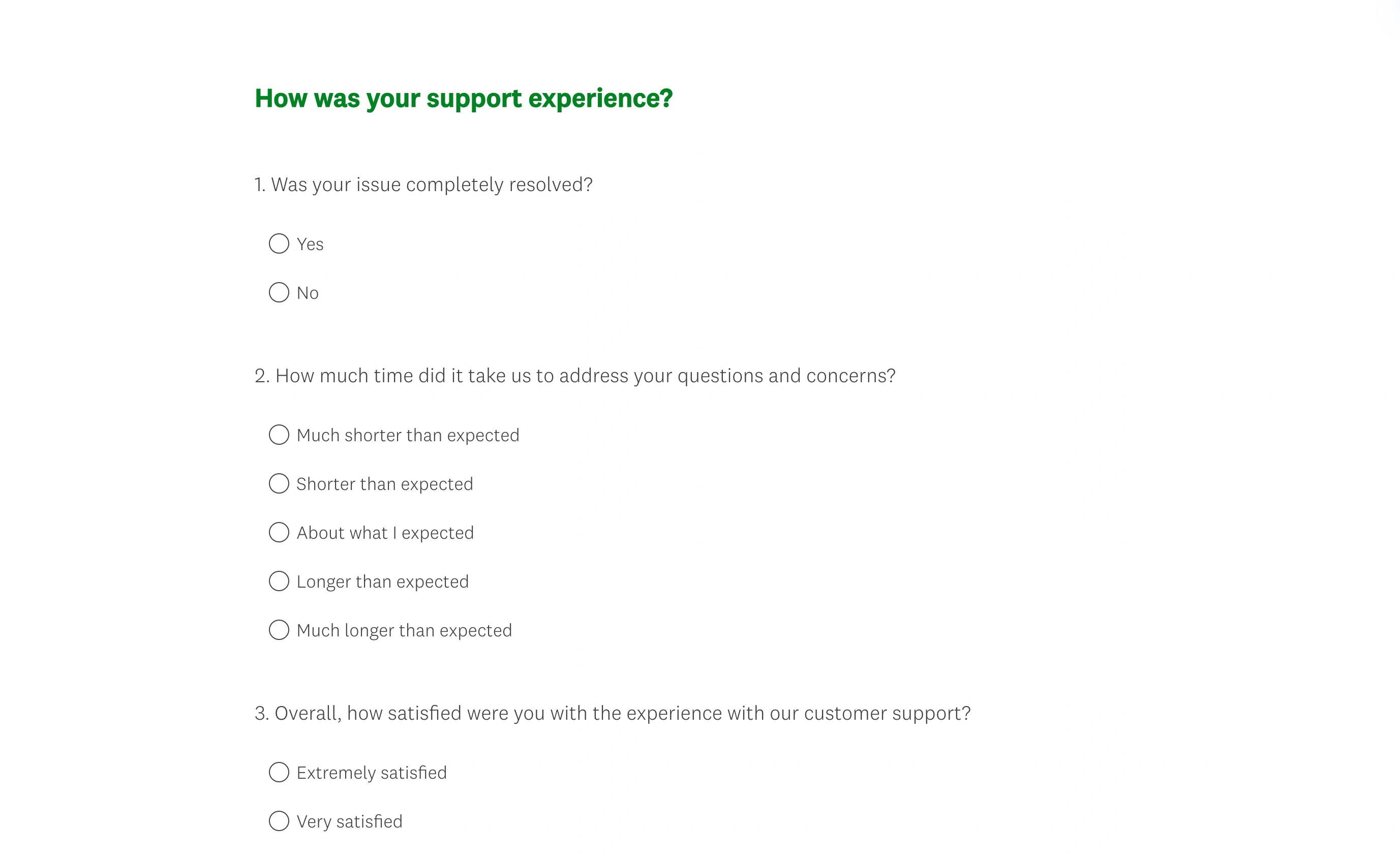
Try this Fomr employee feedback form to see its question layout. It asks for a name and does not promise anonymity or automate an employee feedback program.
The anonymity question every employee feedback software vendor should answer
Across every tool here, the pattern is the same: the marketing page says anonymous, and the help docs say something more precise. Read the help docs.
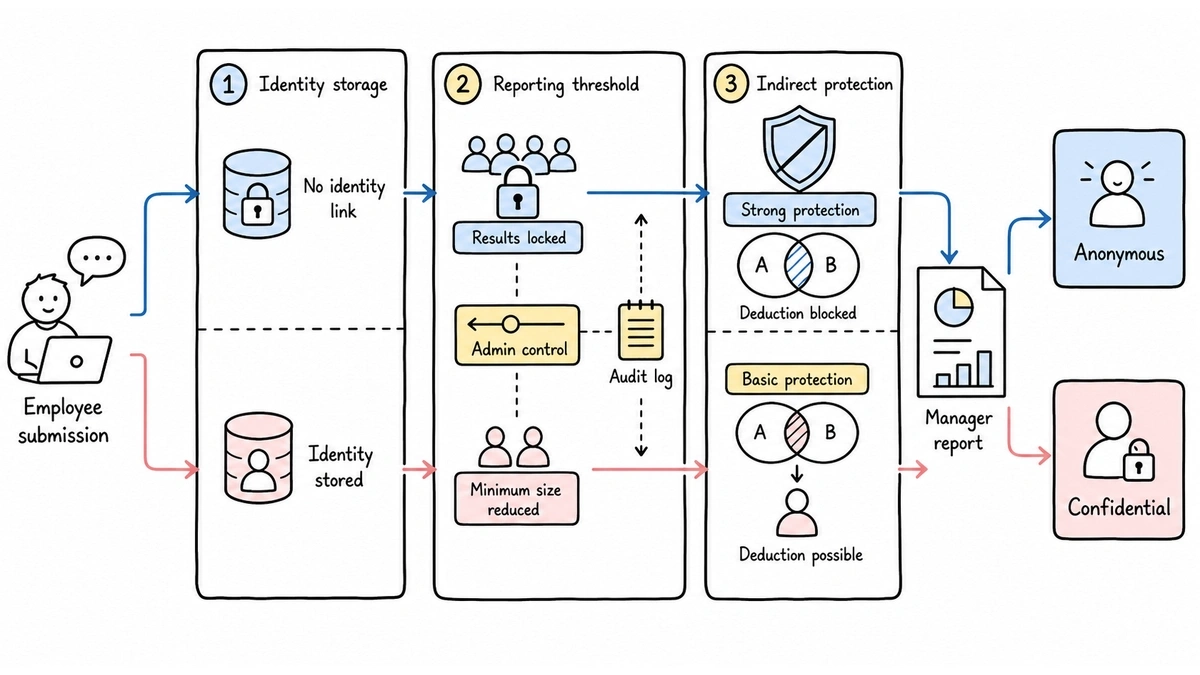
Three things to nail down before you sign anything. First, whether the identity-to-response link exists in the vendor’s database at all, or only in the report layer. Those are very different privacy postures and only one survives a subpoena or a curious admin. Second, who can lower the reporting threshold and whether anyone is notified when they do. Third, whether the default setting protects against indirect identification, since Lattice’s Basic-versus-Strong split shows that plenty of platforms ship with the weaker option on.
Then match your internal comms to whatever you actually bought. “Confidential, reported only in groups of five or more” is a promise you can keep every quarter. “Completely anonymous” usually isn’t, and people notice when a manager references something only three people could have written.
The short version
For recurring pulse with anonymity enforced by the product, Officevibe, if the bundle price works at your headcount. For eNPS at the lowest published seat price, Lattice Engagement, as long as you’re above 84 seats and you switch on Strong protection. For pulse and 360 under one contract, 15Five. For exit and onboarding at scale, Culture Amp, provided you can live with quote-only pricing and attributed-by-default surveys. For a survey you need out today, SurveyMonkey, with every tracking toggle checked twice.
And for a one-off pulse form you send by link, where nobody has promised anonymity, start one on Fomr for free. No account needed, unlimited responses, and no sales call to find out what it costs.